


PROJECT SUMMARY
The overarching aim of the EURYDICE Project is to improve students’ employability in the field of renewable energies by increasing collaborations between universities and the industry.
Often, the industry expresses concern about graduates lacking practical/applied experience, and that it, therefore, takes a long time to get young starters to perform as required. This lack of practical experience is prevalent across all levels of the education system in South Africa, namely: Technical Vocational Education Training (TVET) and the mainstream higher education with Diplomas, Bachelor’s, Masters and Doctoral degree studies.
This problem exists across all areas of higher education, especially in engineering education. The EURYDICE Project focuses on the field of renewable energies for several reasons
The energy generation landscape in South Africa is undergoing a transition. The vision of South Africa’s energy strategy is to contribute to affordable energy for all, and to minimise the negative impact of energy supply and usage on human health and the environment. It also aims to promote energy efficient technologies across all sectors.
The latest Integrated Resource Plan 2018, published in August 2018, demonstrates significant new wind, solar photovoltaic (PV) and gas allocations, which have to be developed, maintained and managed. This will lead to the generation of a significant number of new jobs and employment opportunities in this sector over the next few years, and result in industry and investors having a clear picture of how the regulator wants the energy system to evolve. Therefore, the project is focused on a higher education framework in renewable energies, from vocational training up to doctoral studies, with the overall goal of enhancing employability

DEFICIENCIES TO BE ADDRESSED
To achieve this, concrete deficiencies have been identified, and will be addressed within the project by means of:
- Bridge the gap between Technical and Vocational Education and Training (TVET) colleges and diploma studies by defining the industrial experience requirements for university of technology (UoT) diploma students, resulting in increased readiness and study ability of diploma students at UoTs such as the Central University of Technology, Free (CUT); Durban University of Technology (DUT); and Tshwane University of Technology (TUT). Therefore, industry players will be identified and involved in the process. The project will develop an “Industrial Portal” as a working tool for the industry, offering work placement to students searching for work placements. The minimum industrial experience requirements for bachelor’s degree students will be defined by the UoTs and discussed with the industry. The developed “Industrial Portal” will also be used for matching industrial offerings and students searching for work placements.
- Increase work experience in bachelor’s degree education at UoTs, by integrating practical experience into the curriculum. As more time is required to fully integrate these into different universities’ curricula in a formal manner, enhancements will be documented as proposals for individual UoTs during the lifespan of the project. The relevant UoT can then make intermediate use of the recommendations for students. The collaboration between universities and the industry automatically brings university staff closer to industry experts. It is expected that real-world case studies will then be integrated into lectures. As well as into practical laboratory experiments, without any formal curriculum changes.
- Increase industry cooperation in postgraduate education. “OpenLabs” and “MobileLabs” will be developed within the project, for the industry to bring industrial problems into the labs to be solved by students. Three European universities within the project consortium are already collaborating closely within the Danube Universities Network, particularly in the field of renewable energies, and have already completed different projects in this area of research and education.
- Deliver workshops and summer schools at all the participating institutions during the lifespan of the project. Guaranteeing that best practice is shared and used to define the implementation of the measures that are being used; ensuring that the inputs of all relevant stakeholders (i.e. South African students) are considered; and that capacity building in South Africa is realised.
PROJECT MANAGEMENT
The project is originally scheduled for 36 months and a summary of the work to be carried in each work package (WP) is outlined in the following sections. As mentioned briefly above, following a request for a project extension, the activities are anticipated to be completed in a longer period of time, following a revised timeframe
The project activities can be summarized as follows:
- WP1: Preparatory activities
- WP2: Development of measures to increase students’ employability
- WP3: Quality management and quality assurance
- WP4: Dissemination and exploitation
WP1: Preparatory activities
In this WP, partners initiated their work regarding the project. After the notice received from the Erasmus+ Executive Agency, the kick-off meeting was arranged for February to reaffirm the objectives, the project schedule, the responsibilities, the deadlines, and the milestones of the project.
WP2: Development of measures to increase students’ employability
Regarding WP2, although at the beginning of the project there have been delays in delivering the relevant tasks on time, for this reporting period there was significant progress and many tasks were completed.
The aim of the task was to get the right conclusions and requirements of the needs of HEI in South Africa. This task outlines the detailed status quo at each partner HEI with regard to the local renewable energy industry and the collaboration activities with them were identified.
The reviewers gave valuable feedback regarding the current state of energy education in SA and the collaboration between the industry and the universities.
This task consisted of three deliverables:
- 1.1: Identification of local renewable energy-related industry stakeholders
- 1.2: Status quo document for each SA University: Self-assessment of HEI concerning energy education and industrial cooperation (energy sector)
- 1.3: Best practice document: Closing workshop – Exchange and discuss results
All three deliverables of this task were merged into one document for streamlining the process.WP2.1_Analysis
The gap analysis aimed to identify the gap at each HEI individual goal. These goals were in line with governmental and university strategies. Each of the South African partners looked at their individual needs with respect to both industry liaison and teaching resources. Afterwards each University identified the gaps and proposed measures to address these gaps. In addition to the report, a closing workshop took place on the 5th of May 2021 and the minutes of this workshop were included in the final report which was submitted.
The sub-tasks leading to the respective outputs are the following:
2.2.1 Definition of individual goals
2.2.2 Individual gap analysis
2.2.3 Definition of individual measures
2.2.4 Summarizing workshop
WP 2.3: Implementation of curriculum enhancement
Based on the results of task 2.2, curriculum enhancements were developed. To get to a sustainable improvement, the South African universities identified enhancements and made proposals for curriculum enhancements. The goal of D2.3.2 and D2.3.3 were to analyse the Bachelor and Postgraduate programs, respectively, as presented by the respective South African universities and use it as basis to propose enhancements to the educational process and curriculum documentation. Each university considered their individual educational programs and identified the learning modules therein which are relevant to renewable energy technologies. A workshop followed where all universities presented their identified modules and proposed ideas which, when incorporated in the educational process, will enrich the student’s experience. A list of the proposed ideas/enhancements grouped per objective area (increased industrial exposure, enhanced entrepreneurial skills and other). Each university matched the proposed ideas to the course modules in a manner, which enhances the curriculum and contributes to the accrediting body (Engineering Council of South Africa) expectations.
WP2.3.1_Minimum requirement for placement of students
WP2.3.2_Documentation of the enhanced bachelor curriculum as a proposal
WP2.3.3_Document of the enhanced postgraduate curriculums as a proposal
WP 2.4: Offering tailored-made fast-track acceleration programme for graduate students
Significant progress was made for WP2.4 which is about the offering of tailored-made fast-track acceleration programme for graduate students. During the reporting period partners agreed on the timeframe of the implementation of tasks and deliverables. Also, important documents were prepared so that to facilitate the process:
- Guide for workshops and ideation events
- Mapping the stakeholders guide
- Virtual Incubator Structure
WP 2.5: Development of the Document of the requirements for “Industry Portal”
The “Industry Portal” aims to improve the process and accessibility to industrial placements by increasing the preparedness and study ability of UoT diploma students. In fact, the portal will help the industry to find the right persons for their needs and in the same way, the students get industrial offers for their needs (e.g. industrial thesis on bachelor’s level).
Partners cooperated and developed the ELMS (Eurydice Learning Management System) which is an online portal used to link renewable energy companies to students and universities in South Africa. The main functions of ELMS are the following:
- Track students doing their internships
- Track companies employing our students
- Track Alumni
- Manage career services events and workshops
- Manage student CVs
- Post projects, job adverts and funding
- Report on all career services and work integrated learning activities
- Create surveys
- Create blog posts
WP2.5.1_Requirements for the Industry Portal
WP 2.6: Development of the ‘Open Lab’ and ‘Mobile Lab’
The aim of the task is to integrate the practical cooperation with industry and to enable the students getting to real cases, at each HEI in South Africa an immobile “Open Lab” and “Mobile Lab” which reflects the special competence in one or more renewable energy topics will be designed. Each European HEI’s will bring in their special know-how in the different fields of renewables and their experience in “Open Lab’s”. The project will enable the remote use of the “Open Lab”. Students from one HEI can use the special laboratory of one of the other HEI. They can plan the experiment, follow the experiment, and analyze the results. With this method even common experiments with students from two or three HEI’s a work commonly on experiments.
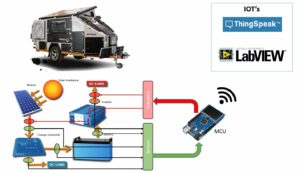
At each South African HEI a “Mobile Lab” in a trailer size will be developed, with one or more special renewable topics. This will enable the HEI to share special equipment, while transporting the “Mobile Labs” from one location to another. It will also enable the HEI to have show-cases in other education units e.g. in rural areas to attract young people and especially females for technical issues in renewable energies. The “Mobile Labs” may also be shared between HEI and Industry for practical education
WP2.6.1_Remote lab Requirements definition
WP2.6.3_Mobile lab Requirements definition
Quality Management
Quality is a key strategic priority that is reflected in every stage of the project life cycle, from the beginning and through to closing. For this reason, the EURYDICE consortium is dedicated in assuring high quality results. When a deliverable is being completed, it goes through a thorough review process, to ensure a quality result, taking also corrective actions where necessary. Quality Management
Dissemination
The Dissemination and Communication plan aims to increase and create awareness of the EURYDICE project. The project dissemination and communication plan will be divided between virtual and physical spaces project dissemination. The virtual dissemination of the project will depend on the effective and efficient use of the project website and social media platforms. The physical spaces will range from events and activities within the projects to presenting the results of the projects itself on various forums, like conferences. Marketing or promotional material will be designed, printed and disseminated between all the project partnersEurydice Dissemination Strategy
PROJECT IMPACT
To get to impacting project results, the project will decouple the project results from the formal curriculum changes at universities, because these timelines cannot be influenced by the project. Goal of the project is to identify and define enhancements as proposal. The project results will lead automatically to a closer cooperation between university and industry. With the stronger cooperation between industry and university on personal level and the developed “Industrial Portal”, “Open Lab” and “Mobile Lab” the impact of the project is realistic and feasible.
The EURYDICE project delivers the following main results:
- Status quo Analysis for each South African HEI with stakeholder and best practices
- Goal, gap and measures for each South African HEI
- Requirements for industrial placements and curriculum enhancement in bachelor and postgraduate programs
- Offered Tailored made Fast Tracking Programs
- Industry Portal
- Open lab and mobile lab
- Transfer to other universities within Africa and governmental organizations
The open labs will be accessible to immediate communities to the SA partner institution but also geographic regions during transportation of the open labs across partners. Using universities´ lab infrastructure by students (open labs), industry partners will have access to the labs for applied research which also speaks to sustainability of the open labs equipment through joint efforts. Using universities` lab infrastructure by industry (open labs) for industrial research and analysis, due to the fact, that small and medium enterprises can`t afford expensive labs. This activities will be sustained and will assist in sustaining the project even after completion of the project. The industrial portal is another sustained tool for dissemination it is earmarked to outlive the project and be open to other UoTs. The branding of the mobile open lab, is a silent marketing of the project, consortium partners will make use of internal and external media networks to disseminate the progress and results of the project in collaboration of their industry partners. The sustained and increased research network access between SA and EU partner institutions will occur.